

Building Relationships Is the Most Overlooked Skill in the Age of AI
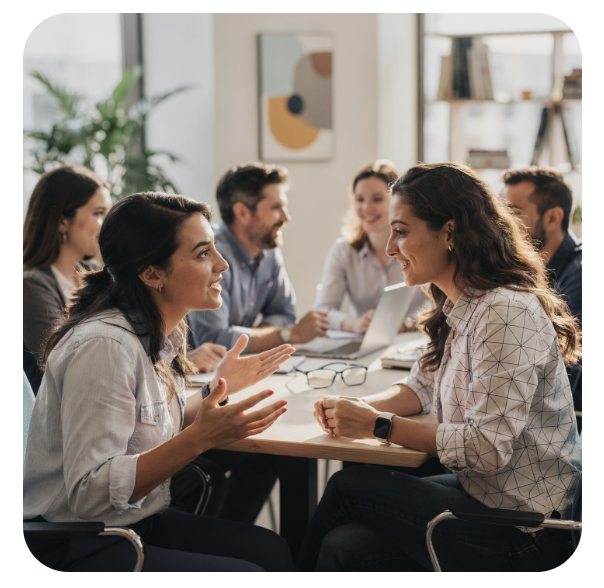
Business Is Personal. (And the data proves it.)
In the past few months, Ofir and I have been interviewing leaders for The Peer Ripple podcast.
Every episode, I ask a different question. How do you build a team that wants to win together? How do you create real accountability? How do you make people feel safe enough to fail?
Every answer lands in the same place.
"In the end, if there is no trust — we can't make it happen."
Every single time.
For years, I believed leading a team was about building the right leadership skills. Then it shifted — awareness, individual strengths, personal development. I kept adding layers.
Skills matter. Awareness matters.
But we ignored the most important part.
Leadership is also biology.
We are not wired to work alone.
Neuroscientists call it the social brain — the part of our brain that activates not when we solve problems, but when we are with other people. We are wired for connection. It is not a soft skill. It is biology.
Look at the Blue Zones — the places in the world where people live the longest. They don't have better gyms or better diets. They have each other.
We are wired to be together.
But when the pace is insane, and the workload is 100 times what it used to be, we feel overwhelmed. We feel overloaded. And when that happens, we preserve energy. We go inward. We work alone.
We don't work alone because we are bad people.
We work alone because we don't have time.
And yet — organizations keep investing in resilience training.
I get it. It sounds reasonable. The world is moving fast, and people are burning out, so we teach them to build resilience. More adaptable.
But here is what we forget.
We already know how to adapt. We are actually very good at it.
Think about COVID. Nobody sent us to a resilience workshop before the pandemic hit. Banks that had never allowed remote work figured it out in days. Companies that swore they needed everyone in the office found solutions overnight. We adapted faster than anyone thought possible.
Not because of training. Because of the people around us.
What made COVID survivable — for individuals and for organizations — was not skill. It was the colleague who checked in. The neighbor who left groceries at the door. The team that held each other through the uncertainty.
Resilience is not a skill you train. It is the outcome of a meaningful connection.
When people feel cared for, they do more. They hold each other through change. They solve together instead of surviving alone.
This is where organizations get it wrong. They invest in resilience as if it were a muscle you build alone. It is not. It grows between people.
And now, with AI in the mix, this matters more than ever.
The Subject Matter Experts (SMEs) will not be the ones seen; AI will have their expertise. What will separate the companies and the people who thrive is something AI cannot replicate: the ability to ask the right questions — of AI, of each other — and to solve the human problems that only humans can solve.
Building relationships is not a soft skill.
It is the most important investment your organization can make right now.
